
Key takeaways
- What they cost: Access platforms on IndustrySearch run from about $10,000 to $50,000, averaging around $30,000, depending on type, size, and build.
- What sets the price: Platform type, height and length, custom fabrication, and material drive the cost.
- Where they fit: Warehouses, factories, and workshops that need safe, repeatable access to height for maintenance, loading, and servicing.
- The payback: A fixed or mobile platform replaces slow, risky ladder work and cuts the far larger cost of a fall.
- The decision: Match the type and size to your task and site, then weigh a purpose-built platform against ongoing ladder and downtime costs.
An access platform gives workers a safe, stable place to stand and work at height. Unlike a ladder, it offers a full working surface, guard rails on all sides, and room to use both hands and carry tools. For any site doing regular work at height, maintenance, truck loading, or machine servicing, it turns a risky, slow job into a safe, efficient one. The category runs from compact mobile units to large fixed stair-and-platform systems, and price follows type and size. This guide covers what access platforms cost in Australia in 2026, the specs that shape the price, and how to match one to your site.
The platform types, and how they drive cost
The type of platform is the first thing that sets both the fit and the price. There are a few main kinds:
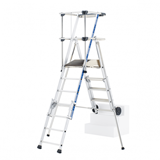
- Mobile work platform: A wheeled unit with a platform and guard rails, moved where it is needed. It sits at the lower end on price and suits general maintenance and access.
- Adjustable-height platform: A platform that changes height for different tasks. It costs more than a fixed-height unit, but one platform can replace several, which lowers the total spend.
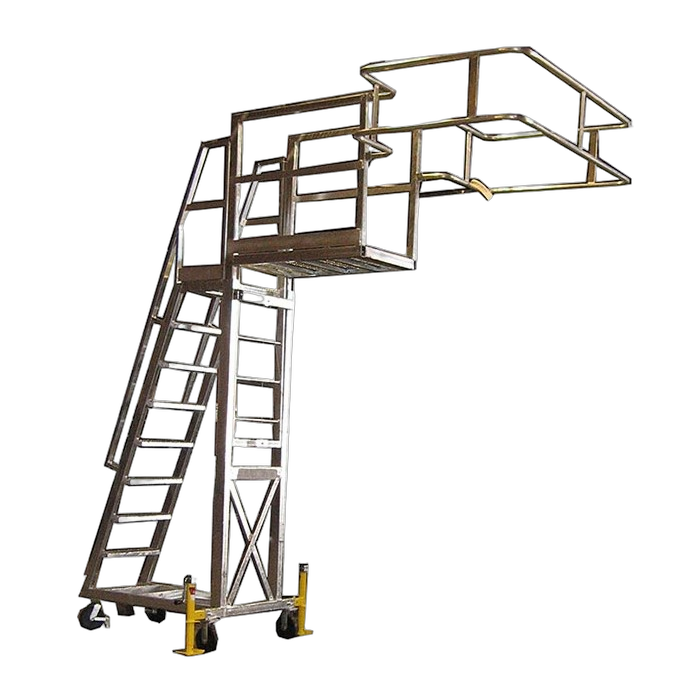
- Truck loading and access platform: A longer platform for safe access along the side or top of a vehicle. Length drives the price here.
- Fixed or modular stair-and-platform system: An engineered, permanent structure built around your plant. It carries the highest price, since it is custom-designed and installed.
Beyond type, size and custom work set the cost. A bigger, taller, or longer platform uses more material and costs more. A standard off-the-shelf unit is cheaper than one engineered around your machinery. Build quality matters too, since a well-made aluminium or steel platform lasts for years and spreads its cost over a long life.
What an access platform costs in 2026
Price tracks type, size, and custom work. As a rough guide for the Australian market:
- Compact mobile platforms: About $10,000 to $20,000. Standard wheeled units for general maintenance and access at modest heights.
- Adjustable and mid-size platforms: Around $20,000 to $35,000. Height-adjustable units and larger platforms for varied tasks across a site.
- Custom and fixed systems: $35,000 to $50,000+. Engineered stair-and-platform systems and long truck-access platforms built to your site.
The average sits near $30,000. A greater height or length, custom fabrication around your plant, and heavy-duty build all push the price tag up. To compare types and sizes, compare access platform quotes from Australian suppliers, and for lighter, lower-cost tasks weigh a full platform against a height-adjustable work platform or an order picker ladder.
| Platform class | Type | Indicative price | Best fit |
|---|---|---|---|
| Compact | Mobile | $10,000 - $20,000 | General maintenance access |
| Mid-size | Adjustable | $20,000 - $35,000 | Varied tasks across a site |
| Custom / fixed | Engineered system | $35,000 - $50,000+ | Permanent plant access |
The specs that shape the price
When you request quotes, these are the things that change the total:
- Platform height: A taller platform needs more material and stronger bracing, which lifts the price. Buy the height your task needs, not more.
- Platform size and length: A bigger working area or a longer truck-access run uses more material and costs more. Size it to the job to avoid paying for deck you never stand on.
- Adjustability: A height-adjustable unit costs more upfront, but replacing several fixed platforms with one lowers your total spend.
- Custom fabrication: A platform engineered around your machinery costs more than a standard unit. Pay for custom only where a standard platform will not fit.
- Material and build: Aluminium is light and priced accordingly; heavy-duty steel costs more but suits demanding sites. Match the build to the load and life you need.
Safety and total cost of ownership
The strongest cost case for an access platform is the fall it prevents. Under work health and safety law, you must eliminate or minimise the risk of falls. A fall prevention device like a platform sits at the top of the control hierarchy, ahead of ladders, as Safe Work Australia sets out. Falls are a leading cause of serious workplace injury in Australia, and the cost of one incident, in downtime, fines, and claims, dwarfs the price of a platform. A platform must meet the relevant Australian standard, so confirm compliance before you buy. On running costs, a platform is cheap to own: budget for periodic inspection and the occasional repair. A well-built unit lasts for years, spreading its price over a long working life. For how to weigh platforms against ladders, the work platform ladder buying guide is a useful companion.
A realistic scenario
Picture a food processing plant in Melbourne where fitters service overhead equipment from ladders during maintenance shutdowns. The ladder work is slow, and every shutdown runs over on time.
An adjustable mobile access platform at around $28,000 changes the maths. Fitters work from a stable deck with guard rails, using both hands, so each service job is faster and safer. Shutdowns finish on time, which cuts the costly downtime that was the real expense. The platform also removes a serious fall risk from the site. Against saved shutdown hours and the cost of a single fall, it pays for itself quickly.
Frequently asked questions
Why buy a platform instead of using ladders?
A platform is safer and faster: a full deck, guard rails, and both hands free, against a ladder's narrow footing. It ranks above ladders in the fall-control hierarchy, and the time it saves plus the fall it prevents usually outweigh its higher price.
Which type suits my site?
Mobile units suit general maintenance access, adjustable units suit varied tasks, truck platforms suit vehicle loading, and fixed systems suit permanent access around plant. Match the type to your task to avoid overspending on capability you do not need.
Is an access platform the same as a scissor or boom lift?
No. Access platforms here are fixed or mobile access structures, not powered elevating work platforms like scissor and boom lifts. They cost less and suit repeatable access at set heights, rather than variable powered reach.
What ongoing costs should I plan for?
Running costs are low. Budget for periodic safety inspection and the occasional repair or part. A well-built platform lasts for years, so the purchase price spreads over a long life for a low cost of ownership.
What matters most
An access platform is a safety and productivity investment, judged on total cost, not just the price tag. Match the type and size to your task and site, buy the height and length you need without overspending, and confirm the platform meets the relevant Australian standard. Get the fit right and it speeds up work at height while removing a serious fall risk. Get it wrong and you either overspend on a custom system you did not need or keep paying in slow, risky ladder work.
Ready to compare types, sizes, and pricing on access platforms? Get quotes from access platform suppliers across Australia here.